Tell us about the job
Takes about a minute. No obligation.
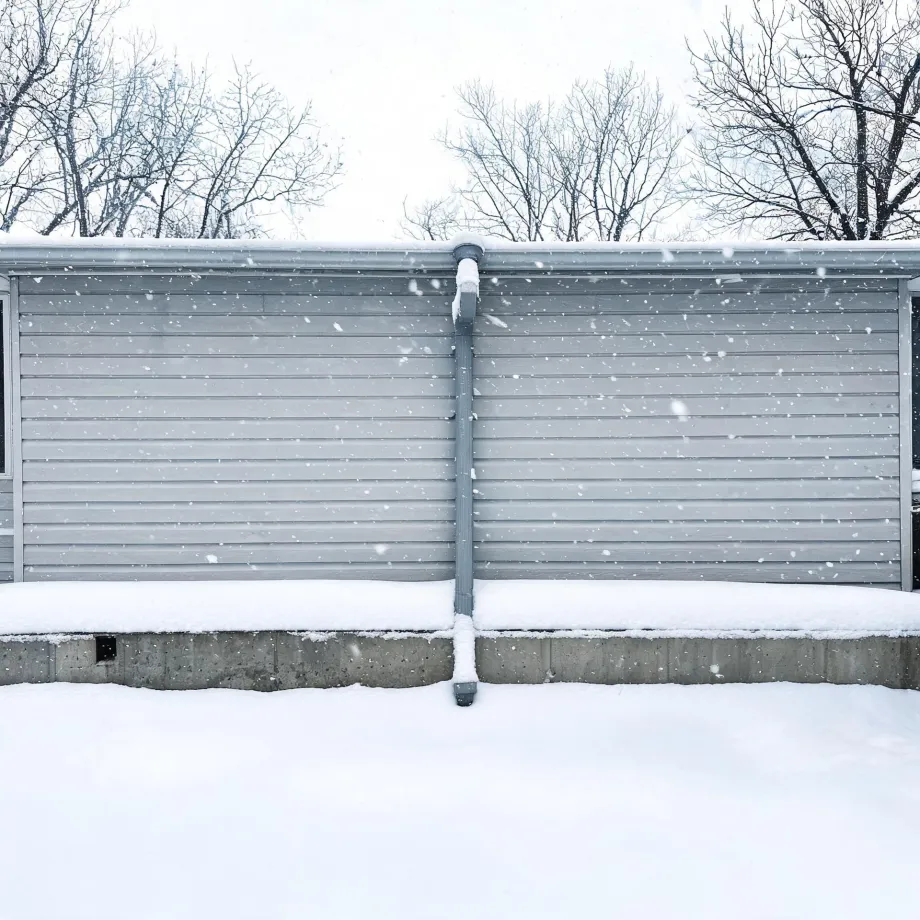
Sizing a heat pump for this area starts with what the compressor is being asked to carry in cold weather. Homes in Southeastern Connecticut Planning Region, CT run heat about eight months a year, from October through May. As outdoor temperatures drop through that stretch, a heat pump's capacity falls, and a unit that was sized on a rule of thumb rather than a load calculation runs harder and longer to close the gap. A contractor working the quote here establishes the backup heat threshold alongside the primary sizing, because the heating demand is real and the penalty for underspecifying it shows up in the compressor and the refrigerant circuit well before the homeowner notices anything wrong.
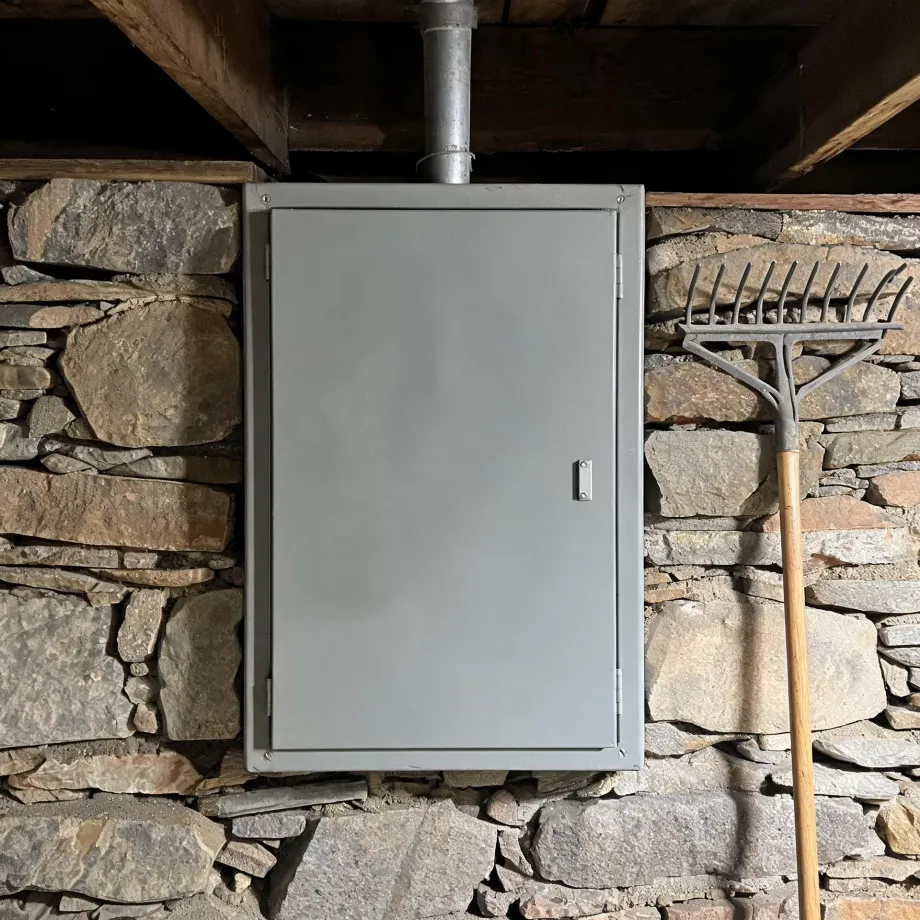
Ductwork laid out for a furnace and panel capacity sized for a smaller electrical load are what a contractor prices against when quoting a heat pump here. Half the homes in Southeastern Connecticut Planning Region, Connecticut were built in 1969 or earlier (2020-2024 ACS 5-year). A house built to that point was wired and ducted around equipment that has since been replaced at least once, and the original infrastructure often was not upgraded to match. What that means for a heat pump installation is concrete: the contractor has to assess whether the existing duct runs can move the volume a heat pump requires and whether the panel will support the new draw before the unit itself becomes the question.
What a Heat Pump Installation Puts in Your Home
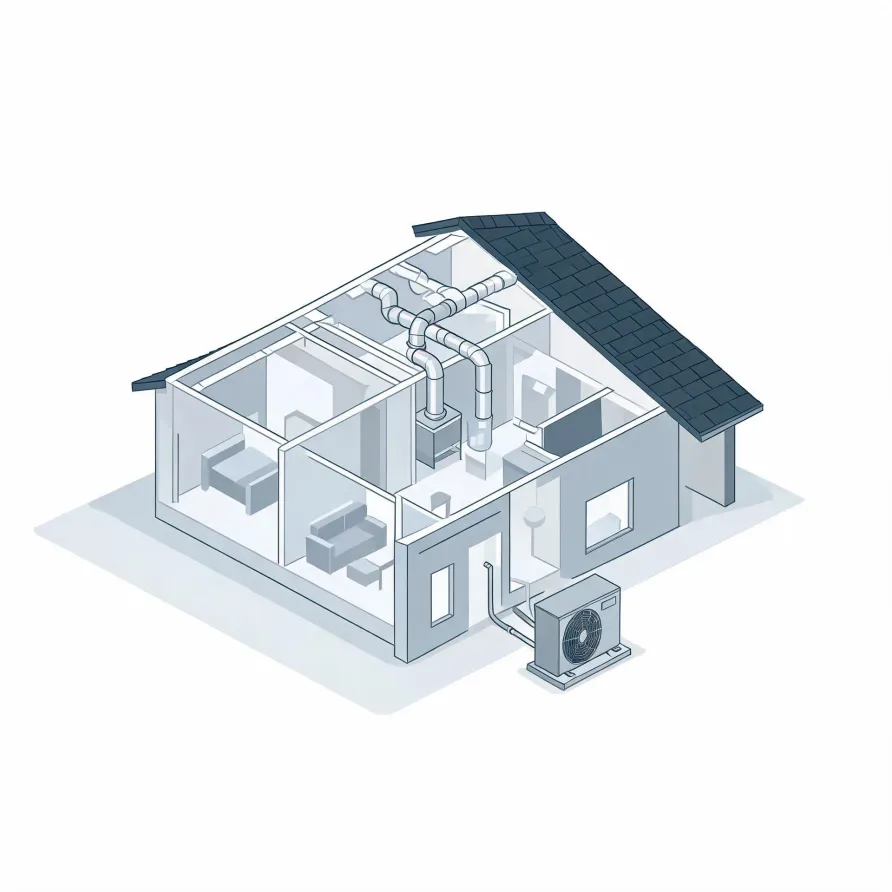
The outdoor unit sits on a pad beside the house and holds the compressor and coil that do the core work of the system. Inside, an air handler mounts in a utility space, attic, or closet and moves conditioned air through the home. Together these two cabinets are what a contractor sets in place.
A refrigerant line set runs between the two units, carrying the working fluid back and forth through insulated copper tubing. A thermostat goes on an interior wall where it reads the living space and signals the system when to run. Both are part of what a full installation covers.
The drawing shows a typical layout, and a licensed contractor determines exactly what applies to this house.
Find a contractor in Southeastern Connecticut Planning RegionSoutheastern Connecticut Planning Region, by the numbers
Half the homes in Southeastern Connecticut Planning Region, Connecticut were built in 1969 or earlier (2020-2024 ACS 5-year).
U.S. Census Bureau, 2020-2024 American Community Survey 5-Year EstimatesSoutheastern Connecticut Planning Region, Connecticut holds 126,425 housing units (2020-2024 ACS 5-year).
U.S. Census Bureau, 2020-2024 American Community Survey 5-Year EstimatesOwners occupy 65.1% of the occupied homes in Southeastern Connecticut Planning Region, Connecticut (2020-2024 ACS 5-year).
U.S. Census Bureau, 2020-2024 American Community Survey 5-Year EstimatesHeat Pump Installation Rules for Southeastern Connecticut Planning Region, Connecticut1 codes & standards
Licensing and Legal Requirements in Southeastern Connecticut Planning Region, Connecticut
Connecticut requires a state licence to perform, or to advertise, heating, piping and cooling work: no person may practise an occupation this chapter covers without first obtaining one.