Tell us about the job
Takes about a minute. No obligation.
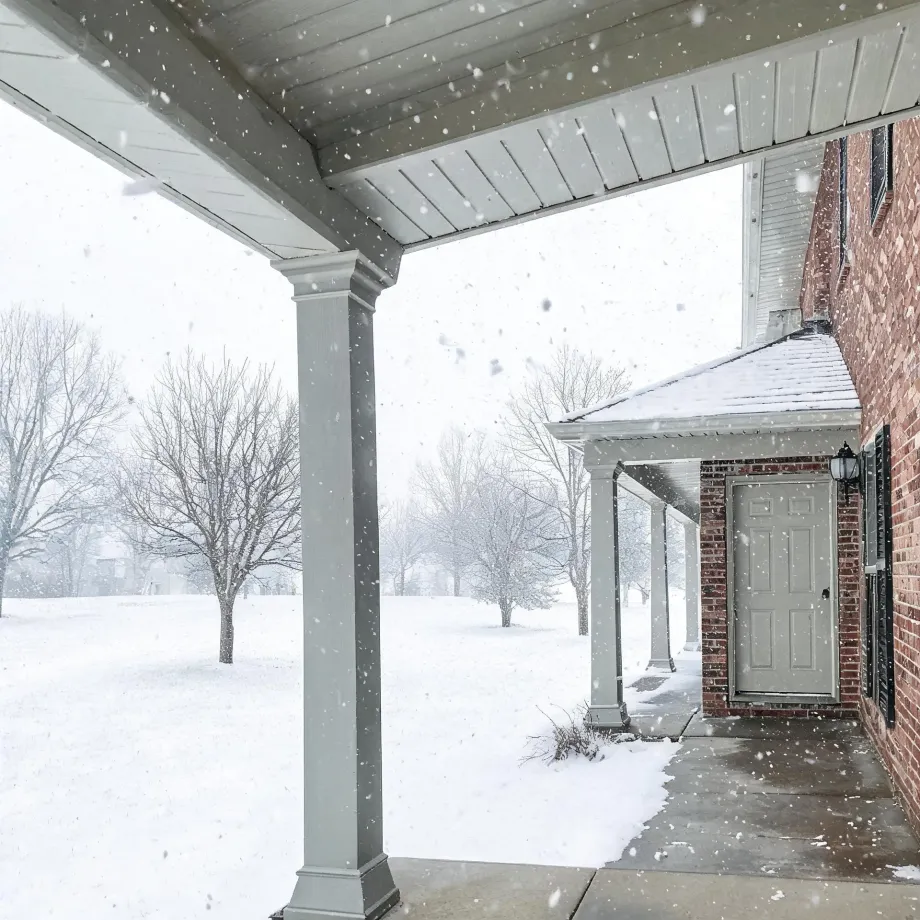
Sizing a heat pump for a house in Northeastern Connecticut is where the install either works or quietly fails. Homes in Northeastern Connecticut Planning Region, CT run heat about eight months a year, from October through May. A heat pump loses capacity as outdoor temperatures drop, so the colder weeks of that stretch are exactly when the system is asked to do the most and can deliver the least. A contractor has to work out where that crossover point falls for the specific house before the equipment goes in. Get the calculation wrong, and the backup heat source carries a share of the load the heat pump was supposed to own.
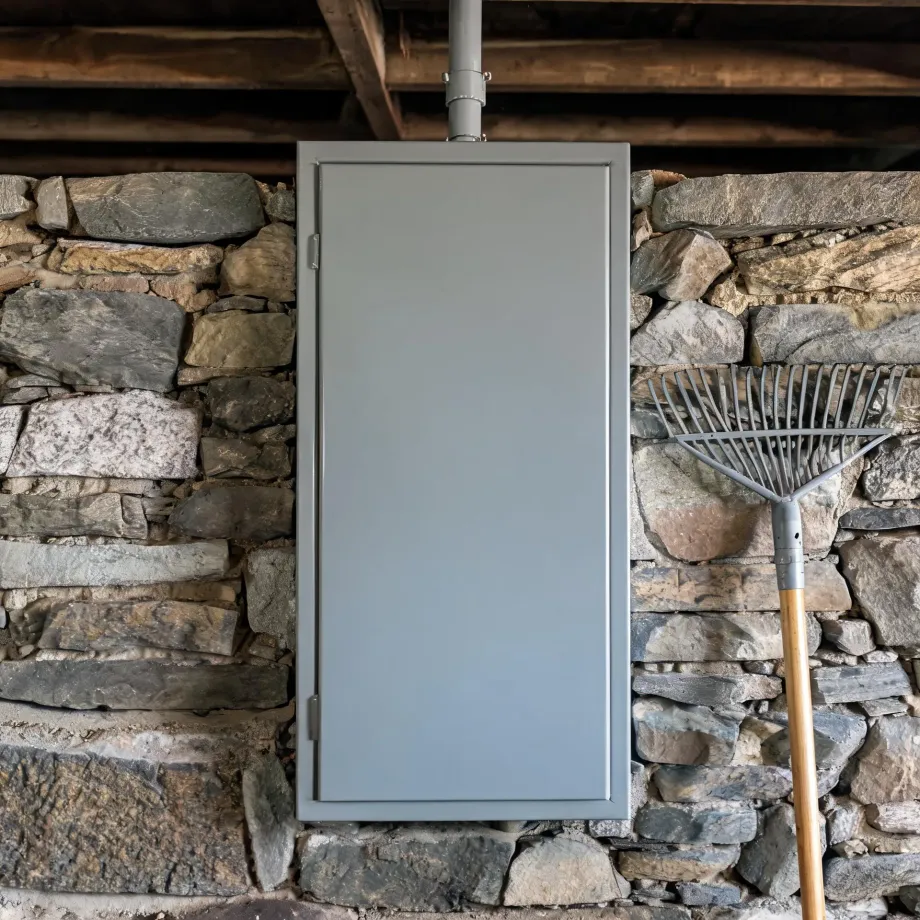
Ductwork laid out for a furnace and a separate air conditioner was never sized with a heat pump's airflow requirements in mind, and service panels from that same era were designed around a smaller electrical load than a modern heat pump draws. Half the homes in Northeastern Connecticut Planning Region, Connecticut were built in 1973 or earlier (2020-2024 ACS 5-year). A contractor quoting a heat pump installation here has to get into the attic, the basement, or the crawl space to find out whether the existing duct runs can carry the new system's output and whether the panel has room for the additional circuit. What they find in those spaces determines whether the job is straightforward or whether duct modifications and an electrical upgrade go on the invoice alongside the equipment.
What Gets Installed With a New Heat Pump
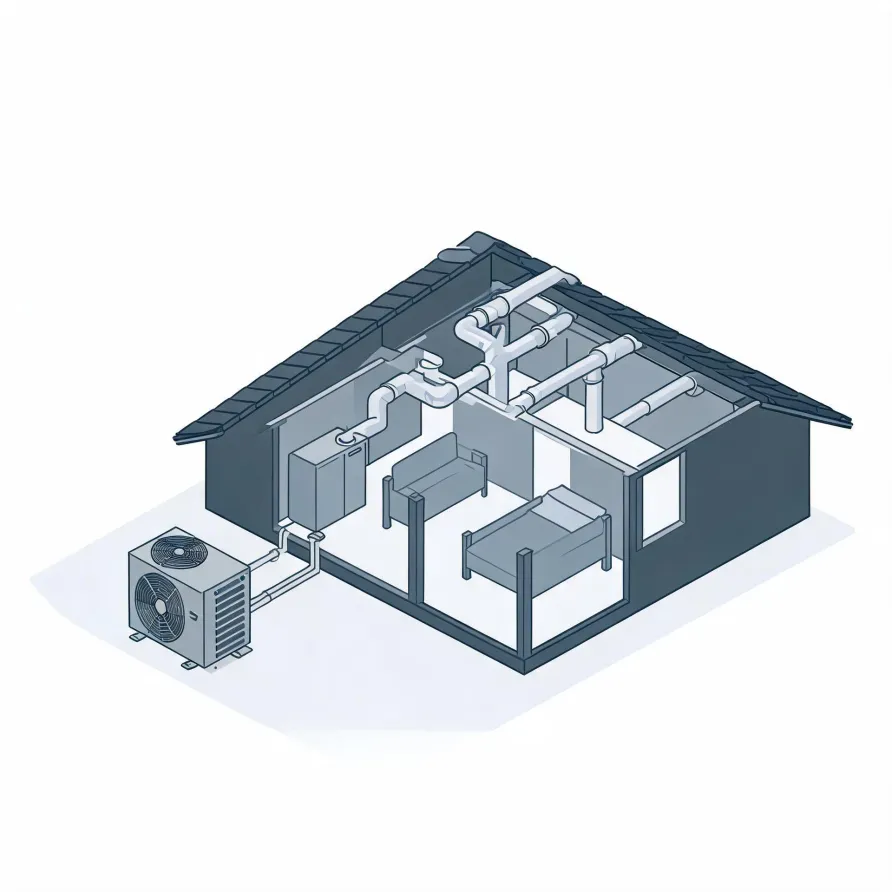
The outdoor unit is the piece a homeowner notices first, a cabinet that sits on a pad or mounted bracket outside the house and holds the compressor and one set of coils. Inside, an air handler occupies a utility closet, basement, or attic and moves conditioned air through the home. Together these two units do the core work of the system.
A refrigerant line set runs between the outdoor unit and the air handler, carrying the working fluid that links the two. A thermostat goes on an interior wall where it reads the living space and tells the system when to run. Each of these pieces is part of what a contractor puts in place during a heat pump installation.
The drawing shows a typical layout, and a licensed contractor determines exactly how each piece fits the conditions of your specific home.
Find a contractor in Northeastern Connecticut Planning RegionNortheastern Connecticut Planning Region, by the numbers
Half the homes in Northeastern Connecticut Planning Region, Connecticut were built in 1973 or earlier (2020-2024 ACS 5-year).
U.S. Census Bureau, 2020-2024 American Community Survey 5-Year EstimatesNortheastern Connecticut Planning Region, Connecticut holds 41,736 housing units (2020-2024 ACS 5-year).
U.S. Census Bureau, 2020-2024 American Community Survey 5-Year EstimatesOwners occupy 77.3% of the occupied homes in Northeastern Connecticut Planning Region, Connecticut (2020-2024 ACS 5-year).
U.S. Census Bureau, 2020-2024 American Community Survey 5-Year EstimatesHeat Pump Installation Rules for Northeastern Connecticut Planning Region, Connecticut1 sourced rules and standards
Licensing and Legal Requirements in Northeastern Connecticut Planning Region, Connecticut
Connecticut requires a state licence to perform, or to advertise, heating, piping and cooling work: no person may practise an occupation this chapter covers without first obtaining one.