

What emergency heat means on a Connecticut heat pump
What does emergency heat mean on my heat pump thermostat?
Your thermostat has an "emergency heat" or "emfer heating. Maybe you bumped it by accident, or maybe the heat pump outside stopped running and you're trying to figure out why there's a backup setting at all. Either way you want to know what flipping that switch actually does before you touch it, especially with what power costs in Connecticut.
Emergency heat shuts off the heat pump and runs backup heat alone
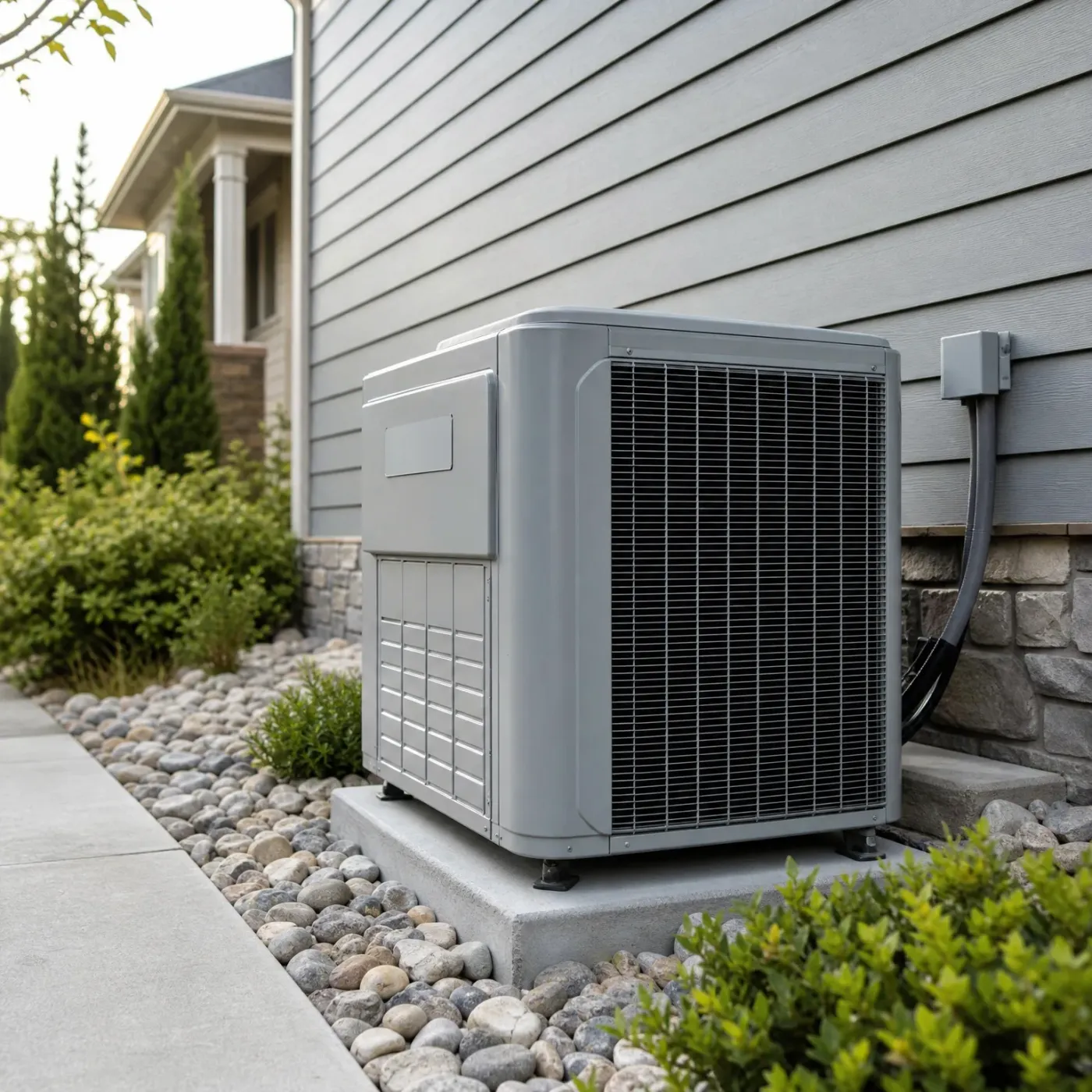
Emergency heat is a manual switch. It tells the system to stop using the outdoor heat pump unit entirely and run only on the backup heat source, usually electric resistance coils or a furnace. It's meant for when the outdoor unit has failed, iced over without defrosting, or is waiting on a repair. Connecticut winters get cold enough that backup heat exists in nearly every system here for exactly this reason. The problem is that backup heat costs more to run than the heat pump, often by a lot, and with Connecticut's electric rates that difference shows up fast on the bill. If your thermostat is set to emergency heat and you didn't put it there, something likely knocked the outdoor unit out of service.

The bedroom window has fogged up at the edges, and it's not from the cold. It's August, almost midnight, and the air coming through the vent feels wrong somehow, thinner, not the cool push you're used to. You kick off the sheet and it sticks damp to your leg anyway. Out in Connecticut this kind of night is exactly when a heat pump has to work its hardest to keep up, and you can hear the outdoor unit isn't running the way it should. You get up and check the thermostat in the hallway, half expecting to see a code or a blinking light, and that's when you notice it's set to emergency heat.


How the backup heat actually works
- A heat pump moves heat from outside air into your house, and that works down into the teens before it struggles.
- When the outdoor coil can't pull enough heat from the cold air, the system leans on electric resistance coils or a furnace built into the air handler.
- Emergency heat shuts off the outdoor unit entirely and runs that backup source alone, nothing from the compressor outside.
- Defrost cycles briefly reverse the system to melt ice off the outdoor coil, and that's normal, not a sign you need emergency heat.
- Auxiliary heat kicks in on its own alongside the heat pump when it's especially cold, which is different from emergency heat overriding it completely.
- Running on emergency heat for days without the outdoor unit usually means something outside has failed and needs a look before the backup source runs up the bill.
Your heat pump is built to pull heat out of the outside air even when that air feels freezing. It can do that down into the teens. Below that, there's less heat out there to grab, and the outdoor unit starts losing ground. That's where the backup source comes in, electric resistance coils in the air handler for most Connecticut homes, or a furnace if yours is set up that way. Auxiliary heat is the normal version of this. The thermostat brings the backup source online alongside the outdoor unit on the coldest days, and both run together until the house catches up. You didn't do anything, the system decided it on its own. Emergency heat is different. Flip that switch and the outdoor unit shuts off completely. The compressor outside stops. Whatever backup source your system has is now doing all the work by itself, and electric resistance heat costs more to run than the heat pump does. You'll also notice the outdoor unit pause and seem to run backward for ten minutes or so sometimes. That's a defrost cycle clearing ice off the coil, not a malfunction, and it has nothing to do with emergency heat. If the outdoor unit hasn't kicked back on in a day or two and you're still on emergency heat, something out there likely needs attention.



Outdoor coil frosts over as it pulls heat from cold air.
Defrost cycle kicks in and briefly reverses the system to melt the ice.
Indoor air feels cool for a few minutes during that reversal.
A sensor or switch fails, and the heat pump can't finish defrosting.




Hand off the search today
Describe what your heat pump is doing once, in one form.
Once you send the form, finding a pro is off your list.
There's no charge for the request.
Auto Mode or Emergency Heat
Leave it on auto
- The system decides on its own whether to run the compressor or lean on backup heat, so you don't have to watch the thermostat.
- You get the cheapest heat available at that moment, since the compressor usually costs less to run than electric resistance coils.
- If the outdoor unit is working fine, there's no reason to override it, and auto mode leaves it alone to do its job.
- A thermostat stuck in emergency heat by accident can run up a power bill for days before anyone notices, and Connecticut power isn't cheap.
- This only works if the compressor outside is actually running, which you can check by listening or feeling for warm air at low settings.
Switch to emergency heat
- This shuts the outdoor compressor off completely and forces the house to run on electric strips or a backup furnace instead.
- It's meant as a stopgap when the outdoor unit has frozen up, failed, or needs a repair before it can run safely again.
- The air coming through the vents will feel different, warmer and steadier, since it's not relying on a heat exchange with outside air.
- Running on it for more than a day or two usually means something outside needs a technician's attention, not just a thermostat switch.
- Because electric resistance heat draws more power, leaving it on by mistake through a cold stretch adds up fast on a Connecticut bill.
- If you didn't switch it yourself, it's worth checking the outdoor unit for ice, debris, or a compressor that isn't turning on.

Summer air here runs heavy. Averaged across the state, the dew point sits at 61°F through June, July and August, according to NOAA climate data. That's the kind of mugginess that makes your heat pump work harder on the cooling side too, since it has to pull moisture out of the air along with the heat. You'll notice it as a system that runs longer cycles, or a house that feels cool but still sticky. It's a different job than the emergency heat question above, but it's the same unit, and a coil or sensor already under strain in winter is one more thing worth having looked at before the humid months lean on it again.
NASA POWER T2MDEW county cells weighted by homes
Emergency heat is backup heat, the electric coils or furnace taking over because the heat pump outside isn't moving warmth into your house. Sometimes that's a thermostat bumped by accident, and switching it back to normal fixes it on the spot. Sometimes it's a frozen coil, a dead sensor, a defrost cycle that can't finish, and the system stays stuck on backup until someone gets out there and fixes the actual problem. Running on emergency heat for a night won't hurt anything, but it costs more to run and it isn't fixing what's wrong outside. The thermostat told you something real was off. Instead of calling around Connecticut for someone who works on heat pumps, checking reviews, explaining the same problem three times to three different companies, you can send one form and let a licensed contractor take it from here. You'll know where you stand once the heat pump itself gets looked at, not before.


Hand off the heat pump problem
A thermostat stuck on emergency heat usually points to something failing outside: a frozen coil, a dead sensor, a compressor that won't start. Finding someone who works on heat pumps in Connecticut, calling around, explaining the symptoms again and again, comparing quotes, that's the part this page takes off your plate. Send the form and a contractor takes it from there, licensed and ready to diagnose what's keeping your heat pump from doing its job before your backup heat runs your electric bill higher than it needs to.
Explain the job once and skip repeating it on every call.
You only hire the pro if you want to.