


Can a heat pump keep up in a Connecticut winter

Step 1 of 3: Equipment

A heat pump can keep up in a Connecticut winter, but it needs to be sized and installed for cold weather, not just mild days in October. Older heat pump models lose capacity as the temperature drops, and below the teens or single digits many of them can't pull enough heat from the outside air to keep the house warm on their own, which is why a lot of homes end up leaning on a backup source during the coldest stretches of January and February. Newer cold-climate heat pumps are built differently. They're rated to keep producing heat well below zero and don't need that backup nearly as often. What matters for you is which kind is on your house, or which kind goes in if you're installing one, because that decision is what separates a heat pump that struggles in a hard freeze from one that doesn't.

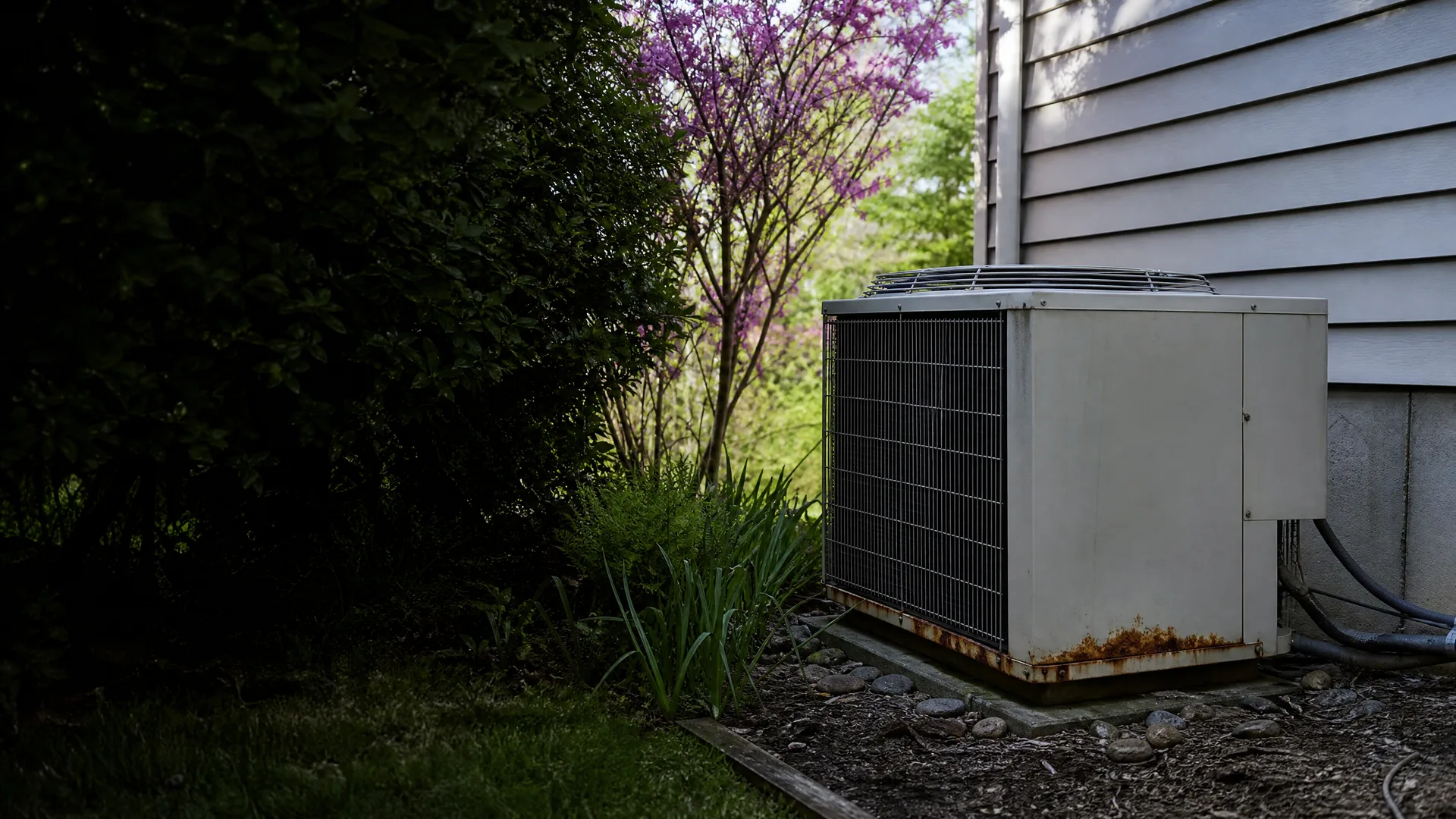
An outdoor air conditioning condenser unit with rust streaks sits on a concrete pad beside a light-colored lap-sided house, surrounded by shrubs, gravel and a flowering tree.

You walk out to the side yard in March, the first warm afternoon after a long stretch of cold, and the snow around the unit has finally melted back enough to see it clearly. Rust runs along the base, worse than you remembered from last fall. The panel seams show it too. You think back to January, to the nights it ran almost constantly and the upstairs still felt a few degrees off. You didn't call anyone then. You told yourself it got you through. Standing here now, you wonder how many more winters this one has in it, and whether it was ever sized right for what Connecticut asks of it in the first place.

A woman stands in the open doorway of a white stucco house holding the dark door, facing a man in a black cap and shirt seen from behind in the blurred foreground, with a potted flowering plant beside the entry.

Below freezing, the heat pump is still making heat

A heat pump doesn't switch to some backup trick when it's cold out. It pulls heat out of the outdoor air the same way it does in October, by running refrigerant through the outdoor coil at a temperature colder than the air itself, so heat still moves into it even at 20 degrees. As the outdoor coil gets colder, frost builds on it, and the system reverses itself for a few minutes every so often to melt that frost off, blowing cool air inside briefly before it switches back. That's normal. What changes in deep cold is how hard the compressor has to work to pull the same amount of heat, and a unit sized and staged for Connecticut winters handles that differently than one sized for a mild October afternoon.

Whether the system in your house was set up with that in mind isn't something you can tell from the thermostat. It comes down to how the installer sized the unit and set the staging for your specific house, your ductwork, the exposure of that outdoor coil to wind and drifting snow. A local installer who works on heat pumps through a full Connecticut winter, not just in shoulder season, has seen which setups keep up at 10 degrees and which start leaning hard on backup heat. Getting matched with one contractor who can look at your actual system, rather than a general answer, is the way to know where yours stands.

Interior corner of a living room with a beige upholstered sofa and dark cushion in the foreground, a ceramic vase of leafy branches on a dark side table by a curtained window, a framed picture on the wall, and a wood-surround fireplace at right.
A gray outdoor heat pump unit with a large fan grille sits on a concrete pad beside a house with horizontal lap siding, next to a green shrub, mulch bed, and lawn.

Running clean, keeping up

This is what a heat pump should look like through a Connecticut winter. The coil stays clear, the fan turns freely, and the unit pulls heat from the air even when the number on the thermostat outside reads low. Clean coils move more heat per hour than dirty ones, which matters most on the coldest nights.


A weathered outdoor condenser unit on a concrete pad beside a house with white horizontal vinyl siding, with refrigerant lines and conduit running to a wall-mounted electrical box.

Grime and age cut into capacity

Weathering and buildup on the grilles block airflow across the coil, so the unit works harder to move the same amount of heat. An older unit in this shape may already be short on capacity before the temperature even drops. Rust at the base is worth a second look, not just a wipe-down.

Why does my heat pump run so long when it's really cold out?

You notice the outdoor unit never seems to shut off once the temperature drops into the teens or lower, the fan running almost nonstop for hours at a stretch. It makes you wonder if something's wrong with the system, or if it's working harder than it should have to, especially with Connecticut electric rates being what they are.

Long run times in deep cold are normal, not a sign of trouble

When it's 15 degrees outside, there's less heat in the air for the outdoor coil to pull in, so the system moves more air across it for longer to deliver the same warmth to your house. A furnace burns fuel and heats quickly in short bursts. A heat pump works differently, running longer at a lower output to keep the house at temperature instead of blasting hot air and shutting off. That's why it can run for hours straight on a cold January night and that's expected. What matters is whether the air coming out of the vents still feels warm and the house holds its temperature. If the unit runs constantly and the house still feels cool, that points to a sizing or capacity problem worth having checked.

A woman with long gray hair wrapped in a checked blanket sits on a sofa by a window with yellow autumn foliage outside, with a lamp, framed picture and plant in the background.
An older woman in a cream knit sweater sits on a sofa by a window, looking out at sunlit trees with yellow and orange autumn leaves, with a bookshelf and lamp behind her.
A woman with gray shoulder-length hair in a dark knit sweater sits on a cushioned seat by a window, looking out at yellow autumn foliage, with a living room, armchair, houseplant and framed picture behind her.
An older woman with gray hair in a bun, wearing a cream knit sweater, sits on a sofa with a gray blanket and looks out a large window toward yellow-green autumn trees, with a lit table lamp and dark armchair behind her.

Get the right pro for your heat pump

A heat pump that's sized wrong for a Connecticut winter will run the way you've probably seen, long stretches on cold days, maybe a backup coil that kicks in more than it should and pushes the power bill up in a state where power already costs more than most. Sizing that for the cold snaps, not just the mild days, is a job for someone who installs these year-round here and knows which models hold their capacity when it's in the teens or lower, and where a cheaper unit tends to fall short. Getting matched with one local contractor means you're talking to someone who already knows Connecticut winters, not explaining your situation five separate times to five different companies. If your heat pump is struggling to keep the house warm, or you're putting one in for the first time and want it sized right from the start, that's worth sorting out before next winter tests it again.

What the rating on the unit means

Every heat pump sold now carries a rating for how much heat it still puts out at 5 degrees, not just at 47. That number is on the spec sheet, and it's the one worth asking about before anything goes on the side of your house. A unit that holds most of its rated capacity at 5 degrees will carry a January cold snap on its own. One that drops to half or less is going to lean hard on backup heat the moment the temperature falls, and backup heat is electric resistance, the most expensive way to warm a house.

Why the install matters as much as the unit

Two houses can run the same heat pump and get different winters out of it. The size has to match the house, not just the square footage but how much heat the place loses on the coldest night it sees. A unit sized for a mild day in October and nothing colder will short cycle or struggle once it's actually needed. The refrigerant charge has to be right too, checked against the line length for that specific install. A contractor who works on these year-round in Connecticut has seen which sizing mistakes show up as a weak January, and sets the unit up to avoid them from the start.

A woman in a cream knit sweater sits in an armchair with her eyes closed near a window showing yellow autumn foliage, with a mug on a round wooden side table beside her.
A gray-haired man with a beard in a blue button-placket shirt reclines on a couch with his eyes closed, beside a sunlit window with a green plant.

A heat pump sized for a mild day in Hartford will run flat out once the temperature drops into the teens, and still fall short of what the thermostat is asking for.

The same house with a heat pump sized and installed for Connecticut's coldest weeks holds the setpoint through those same teens, with backup heat stepping in only when it's actually needed.

An outdoor air conditioning condenser unit on a concrete pad beside a house with light horizontal siding and a concrete block foundation, with bare soil and small green plants around it.
Before you get your heat pump installation
A gray outdoor condenser unit on a concrete pad beside a white horizontal-siding house, with refrigerant lines and conduit running to a wall-mounted disconnect box, bare soil in front and a green shrub at left.
After you get your heat pump installation
A two-story cream-colored house with horizontal siding and a gray hipped roof, flanked by large green trees and shrubs, with a concrete walkway crossing a lawn to a wet street in the foreground.

Connecticut summers run a dew point of 61°F on average across June, July and August, a figure from NOAA's climate data. That's the sticky range, the kind of air that sits on you on the porch. Your heat pump has to wring that moisture out of the house as well as cool it, and the two jobs compete for the same coil. A unit installed with winter capacity as the only concern can come up short here, running long and still leaving the air feeling damp. Sizing that holds up in January cold has to hold up in July mugginess too, or you end up running the fan more than you should just to feel dry.

NASA POWER T2MDEW county cells weighted by homes

Is your heat pump actually keeping the house warm

You've probably caught yourself checking the thermostat twice on the coldest nights, the one upstairs reading a few degrees under what you set it to. Maybe you've noticed a room that used to feel fine now needs a space heater to get through February. The outdoor unit runs almost the whole time the temperature's down in the teens, and the air coming out of the vents feels cooler than you'd expect for how hard it's working. None of that means the equipment is broken. It can mean the unit was never sized for what a Connecticut winter actually asks of it, and left that way, you end up paying for the backup heat to cover the gap every cold snap, month after month, on a power bill that's already steep here.

  1. A load calculation sizes the system to your house, not a guess

  2. The installer checks your home's cold climate capacity rating against Connecticut's design temperature

  3. Refrigerant lines and electrical circuits get sized to match the equipment chosen

  4. The outdoor unit is set on a stand that keeps the coil clear of snow

Power costs 29.31 cents per kilowatt-hour statewide

At that rate, every kilowatt a heat pump pulls on a cold night costs more here than almost anywhere else. A unit sized wrong won't just run long on the coldest days, it'll run up a bill that stings more in Connecticut than in most states.

EIA-861 2025 statewide residential average

Where this leaves you

  • A heat pump sized and installed for Connecticut's design temperature will hold the house warm through the coldest stretch of winter.
  • The cold climate capacity rating on the spec sheet, not the sticker price, is what tells you whether a unit can do that.
  • A local contractor who installs and services these units every winter knows which models actually hold up in this state's cold, not just on paper.
  • Getting matched with one contractor instead of several means one visit, one set of eyes on your house, and no round of competing calls to sort through.
  • The same unit that keeps you warm in January is the one pulling moisture out of the air every muggy July afternoon.
  • A system sized for your house and your coldest week is the difference between a furnace you trust and one you keep checking on.

A heat pump can carry a Connecticut winter from one end to the other, as long as it was sized for your coldest week instead of your mildest afternoon. That's the whole answer. The rest comes down to whether the unit on your spec sheet was chosen with your design temperature in mind or just dropped in because it fit the budget.

That's where who installs it starts to matter as much as what gets installed. A contractor who works on these systems every winter in this state has already seen which models hold their rated output when it's in the teens and which ones quietly fall short. That's not something you can read off a brochure. It comes from servicing calls in January, not from a product page.

When you get matched through this page, it's with one contractor, not a handful competing for the job. One person looks at your house, your ductwork, your existing unit, and tells you what it actually needs. You're not fielding five calls and trying to guess who's right.

The same system that gets this right in February is pulling damp air out of your house in July, so getting the sizing right pays twice. Get the unit matched to your house and your coldest week, and you stop checking the thermostat twice on the bad nights. That's the point of doing this right the first time.

Corner of a house with light horizontal lap siding, a white gutter and downspout, and a window, beside a mulched bed with small shrubs, a lawn, wooden fence and trees in the background.
Close-up of a white gutter along an asphalt-shingle roof edge with dry brown leaves collected in it, a downspout and lap siding below, and blurred autumn trees in the background.
Exterior corner of a house with horizontal lap siding above a stone veneer base and a dark-framed window, with ornamental grasses and shrubs in the foreground and trees in low sunlight behind.
A white horizontal-siding house with a steep gray shingled gable roof, fronted by trimmed shrubs, a brick walkway, and a lawn scattered with fallen autumn leaves.
Corner of a house with cream horizontal lap siding, a black-framed window, asphalt shingle roof with dark fascia, white hydrangea blooms and green shrubs below, and a leafy tree and wood fence to the right.

A pro who works on heat pumps

One installer gets your project, so there's no bidding war over it.

Find a local pro

There's no charge for the request.